Monday, May 16, 2011

Red Lentil Dal with Cabbage


Portland recently took a turn for the chilly. There are still asparagus and rhubarb to be had, but right now I'm not thinking of icy semifreddos or springy pizzas. I'm thinking about cabbage and beans.

I've always been a fan of Indian dals, the soupy bean dishes beloved by all protein-seeking vegetarians. They're dirt cheap, easy to make, and keep spectacularly well. I always simmer up a massive pot, thinking I'm going to stash some portions in the freezer for future lunch emergencies, and end up eating it all within a few days. I'm currently smitten with a curry-leaf version from Madhur Jaffrey's latest cookbook, which might be the most brightly flavorful dal I've ever made. But recently I'm craving something heartier and humbler. Like cabbage dal.

This recipe is ridiculously easy. The beans -- red lentils, in this case -- are lightly scented with spice (including the you-wouldn't-think-it-works-but-it-totally-does cinnamon stick), and then simmered until they break down into a creamy mess. An entire head of cabbage gets chopped and thrown into the pot, and, amazingly, melts away until you barely know it's there. The resulting dal is a great complement to a tomato-studded curry (I served it with a saucy spinach-pea-tomato concoction), or fine with just a bit of rice or naan and blob of yogurt as its companions. Add some of Patak's garlic chutney (an obsession of mine for several years), and it'll warm you right up until spring rolls around.


Red Lentil Dal with Cabbage

adapted from She Spills the Beans
serves ~6


1 Tbsp high heat oil, such as canola or coconut
3 Tbsp butter or coconut oil
1 tsp cumin seeds
1 tsp mustard seeds
1 onion, finely chopped
3 cloves garlic, minced
2 cups red lentils
1 head cabbage, chopped into 1" lengths
1 stick cinnamon
4 dried chilies (adjust depending to your taste)
1 bay leaf
6 whole cloves
handful of curry leaves (optional)
1 tsp garam masala
salt to taste

Heat the butter and oil in a large pot over a medium-high flame. Add the cumin and mustard seeds, and cook for a minute, until they begin to pop (have the lid at the ready, to keep them from popping out of the pot). Add the onion, and saute until translucent, and beginning to pick up a few brown spots. Add the garlic, and stir for a minute. Add the lentils, cabbage, whole spices, and then add water to just barely cover. Bring to a boil, then reduce heat until it's just high enough to maintain a simmer. Simmer, stirring occasionally, until the lentils are broken down (~1 hour, although it only gets better with time, so 2 hours is better). Season with the garam masala and salt to taste.

Sunday, May 08, 2011

Roasted Rhubarb with Creme Fraiche Semifreddo


Rhubarb! Rhubarb! Rhubarb! After singing the praises of seasonal produce and asparagus last week, talking about rhubarb seems a natural next step. Rhubarb's ruby stalks stick around a bit longer than asparagus, but when they first break through the sad, fruit-free depths of winter, it's no less a spring awakening. In my first-fruits rapture, I bake it into a custard tart, simmer it down into a syrup, or wait patiently (well, somewhat patiently) as it infuses into liqueur. But last week I had a rare extra carton of creme fraiche, which made me think how lovely rhubarb's tartness complements a sweet and creamy dessert. Thus the semifreddo.

For those who haven't been so lucky as to taste their creamy deliciousness, semifreddos are Italian desserts, sort of like a frozen mousse. Most recipes start with a saboyan, whipping (and sometimes heating) together a shockingly large number of egg yolks and some sugar, then lightening the whole mixture with some whipped cream and freezing it in a mold (a loaf pan is fine, which lets you cut dramatic slices). The beaten-in air lightens the mixture, giving you all of the luscious creamy lightness of ice cream without an ice cream-maker. Win!

This recipe is inspired by Suzanne Goin's Sunday Suppers at Lucques, which pairs a rhubarb compote with a vanilla semifreddo. Goin's version is a little less yolky than most, featuring only three eggs, and folds in beaten egg whites as well for an even more light-as-air result. It's ridiculously simple for such a sophisticated dessert, doing away with the stovetop custard bases and fancy machinery, and requiring no more than a bunch of beating and folding. I cut down the cream a bit in Goin's recipe, replacing it with a small amount of cultured creme fraiche instead. It's a small enough amount that it doesn't overwhelm, adding just the merest hint of tang to offset the creamy vanilla. And then there's the rhubarb.

In Goin's original recipe, she pairs the semifreddo with a rhubarb compote, cooked down to a deliciously tangy slump. I've made compotes (both hers and others') and loved them. But since I'm still in the Holy Crap It's Spring! mindset, I wanted to show rhubarb off a little more. Instead of the jammy compote, I went with Canal House's recommendation of roasting the stalks. This recipe still features the rhubarb+sugar+vanilla+wine combination Goin favors (Canal House called for red, but I replaced it with the lighter white that Goin used -- it is Spring, after all), but bakes everything in the oven instead of stewing it on the stovetop. If you're careful enough with your gentle turning, the chunks of rhubarb soften but hold their shape, yielding a tart accompaniment to the creamy semifreddo that's beautiful as well as delicious. And if you serve it promptly (instead of waiting for it to melt, as I did in my picture below), it makes for an elegant plate. Spring dinner party, anyone?

And speaking of Spring, here's a gift for Mother's Day I wrote up for The Oregonian, on how to show love to the new moms in your life (with food, of course).


Roasted Rhubarb with Creme Fraiche Semifreddo

semifreddo adapted from Suzanne Goin's Sunday Suppers at Lucques, roasted rhubarb adapted from Canal House Cooking, Volume 3

serves ~6


Semifreddo:
3 large eggs, separated
2/3 cup sugar, separated
1 cup heavy cream
1/4 tsp vanilla extract
1/2 vanilla bean
1/4 cup creme fraiche (can be omitted if you don't have, or increased for a more pronounced flavor, but this small amount works quite well)

Roasted Rhubarb:
1 lb rhubarb, cut in 2" lengths
1/4 cup white wine
1/3 cup sugar
1/2 vanilla bean (from making semifreddo)

Line a 9" loaf pan with plastic wrap or parchment (if using plastic wrap, you can try to smooth out any wrinkles that will imprint themselves on the finished semifreddo, but I usually fail at that task). Set aside.

Place the egg whites in the bowl of a large mixer, and beat, gradually increasing the speed to high and sprinkling in 1/3 cup of the sugar. Beat until stiff peaks form, then transfer to another bowl (it can be a small one) and set aside.

Add the cream to the mixing bowl, and beat on medium until stiff peaks form. Transfer to a large bowl and set aside.

Place the reserved egg yolks in the mixing bowl, and add the seeds scraped from the vanilla bean (reserve the pod for the roasted rhubarb), vanilla extract, and reserved sugar. Beat until the mixture has lightened in color and thickened and doubled in volume, ~3 minutes. Whisk in the creme fraiche until it is just combined.

Take the yolk mixture, and gently fold it into the bowl of whipped cream. Add the beaten egg whites, and fold in in a few additions, until there are no streaks left, taking care not to deflate the mixture. Pour it into the prepared loaf pan, and place in the freezer. Freeze until solid, at least 4 hours.

When the semifreddo is ready, prepare the roasted rhubarb.

Preheat the oven to 350. Place the rhubarb, wine, sugar, and left-over half of the vanilla bean in an oven-proof pan (I used an 8" square casserole dish, which worked perfectly). Stir to evenly distribute ingredients. Place the pan in the oven and bake for about half an hour, turning the rhubarb once (gently!), until the rhubarb is totally tender but hasn't lost its shape. Remove from the oven, and let cool slightly (or fully, depending upon your taste). Discard the vanilla bean.

To serve, cut thick slices of the semifreddo, and serve topped with the roasted rhubarb and its syrupy juices.

Sunday, May 01, 2011

Asparagus and Shrimp Pizza with Leek and Mascarpone


I am usually not an impulsive shopper. In fact, I'm quite the opposite. I deliberate each purchase in painful detail before I part with my hard-earned money, whether it's a piece of furniture or a sandwich. To give an idea, I've been looking for a new dresser for months -- months! -- while an off-the-tracks shelf from my busted current model is sitting on the floor, displaying my ratty old t-shirts to everyone who needs to walk past to use the bathroom. But there is one purchase that I make without hardly any painful mulling at all: produce. And specifically, seasonal produce.

Here in Portland, we have a small chain of local grocery stores with insanely good produce distributors. It's like having a farmer's market just a few short blocks from my house. They routinely sample their staggeringly delicious fruits and vegetables, and chances are good that once I taste something, I can't resist (although I still held back from the sticker-shockingly $2.99/lb Golden Nugget tangerines a few weeks ago, despite them being the sweetest thing I ever tasted). Their other secret weapon against my miserly indecision is a simple plastic sign with four words: Peak of the Season.

This little sign will get me to buy anything. Anything. Sure, I may not have come to the store for (insert seasonal produce of choice here), but it's the Peak of the Season! Time is fleeting! Life is fleeting! Gather ye Golden Nugget tangerines while ye may! And don't forget the asparagus!

Asparagus is the one vegetable that might as well have "Peak of the Season" tattooed on its butt. As soon as you seem them in the store (and I'm talking about the real local deals, not the shipped-from-another-hemisphere knock-offs), the stopwatch starts ticking. You've only got a few weeks to wolf down as many as you can before they're gone, not to return until the calendar has a whole new year on it. Luckily this is not hard.

Asparagus are lovely, lovely, lovely. I eat heaps of them during their all-too-brief appearance. I roast or steam them, eating them plain or with a simple topping of vinaigrette with lemon and sieved egg. I pickle them to eat all year, or mix them with some angel hair pasta, lemon, and goat cheese (and, if I've got it, precious drizzle of truffle oil). For a while, one of my favorites was this pizza, topped with goat cheese and briny anchovies, and brightened up with a sprinkling of lemon zest. But fickle me, I have a new favorite asparagus pizza. And oh, is it wonderful.

I found this combination on the amazing craftacular blog Posie Gets Cozy. Leeks are sauteed up with butter, and mixed into creamy mascarpone. After you spread your pizza dough with this rich and savory spread, you top it with shrimp and a pile of thin spring asparagus. I'm someone who tends to insert a tangy edge into every meal, and was tempted to replace the mascarpone with cultured creme fraiche, or add a grating of citrus zest. But I'm glad I stuck to the original vision, because it's great. I'm including a recipe for two pizzas, because trust me, you want to make at least that many. After all, it is the peak of the season.


Asparagus and Shrimp Pizza with Leek and Mascarpone

adapted from Posie Gets Cozy
yields 2 pies

This recipe is simple, but a few little tweaks (which I learned between making the first and second pizzas) keep the shrimp from drying out: a quick brine in salt water, and placing them on the pizza under the asparagus.


2 balls of pizza dough, ~10 ounces each
1/2 lb shrimp, peeled (if they're very large, slice them in half lengthwise)
1 Tbsp butter
2 leeks, washed and sliced thinly
1 small tub (8 ounces) mascarpone
~3/4 lb thin asparagus, either left whole (dramatic!) or sliced into short lengths (easier to manage!), tossed with a bit of olive oil and a pinch of salt -- if you don't have thin ones, simple thinly-slice larger stalks

Preheat your oven, with a pizza stone if you have, to 500 degrees for an hour. If your pizza dough has been refrigerated, let it sit, covered, at room temperature for about the same amount of time.

In a small bowl, place a cup of water, a tablespoon or so of salt, and a splash of oil. Add the shrimp, and place back in the refrigerator while you're preparing the rest of the pizza.

Heat a saucepan over a medium flame. Melt the butter, and add the leeks. Sprinkle with a bit of salt. Saute, stirring occasionally, until the leeks are totally softened but not colored. Turn off the flame, and add the mascarpone to the warm pan of leeks, stirring as it melts. Taste and add more salt if needed.

Now assemble your first pizza: Place one ball of the pizza dough on a lightly-floured counter top, and press outward into a thick disk (leaving a 1" unpressed area along the edge as the crust). Pick up the disk and let it drape over the backs of your hands, letting gravity help you stretch it into a 12-14" circle. If the dough resists, let it relax for a few minutes, then try again. Place the stretched dough on a peel (or overturned cookie sheet or cutting board) that's lightly dusted with semolina or other type of flour.

Gently spread 1/2 of the leek/mascarpone mixture over the dough, leaving a 1" rim around the edge. Drain the brined shrimp, and scatter half of them over the pizza, then top with half of the asparagus. Slide the pizza onto the preheated stone in your oven, reduce the heat to 450, and bake ~7-10 minutes, until the crust browns and the shrimp and asparagus are cooked. Remove the pizza from the oven, let cool for a moment, and slice and serve. Repeat for your second pizza.

Monday, April 25, 2011

Blueberry Macarons with White Chocolate Buttercream


I somehow seem to think that I can be immune to the rules that govern everyday life. For the most part, I have grown up and accepted reality. I no longer think that my daily activities are being viewed with special interest by higher beings, nor that I (or my childhood dog) am secretly a princess (Sheba's royal human transformation was predicated on me finding the magic word, which I never seemed able to do, though I would hug her and reassure her that I would someday). No, these days I'm mostly realistic about my lot in this mortal realm. With a few exceptions.

Every now and then I do something so phenomenally ridiculous it truly boggles the mind. If pressed, I would acknowledge that I have no superhuman abilities, and that the laws of physics do, in fact govern my life. But my actions would indicate otherwise. For example, I seem to think that I am capable of removing my sweater whilst riding my bicycle (a button-down cardigan, and a sleepy residential street, but still). Or that tucking your fingers down when cutting onions is for suckers (I am sporting a shiny new butterfly bandage and throbbing pain on my left thumb as I type). Or that I can make Parisian macarons without following directions.

If you are unlucky enough not to have tried a macaron, I must tell you: try one. They are simply the best cookie, delicious and magical, like what a princess would serve to celebrate being released from canine form. Two adorable little disks of nut-enriched meringue (with a ruffly foot on the bottom and the merest hint of marzipan dampness inside) are sandwiched around a filling, usually buttercream or ganache, which unites the element into a whole that is far greater than the sum of its parts. Like I said, magic. If NPR is to believed (and we know they are), the cupcake has met its match.

But the catch: they're fussy. Very fussy. Macarons can go wrong in any number of ways: emerge footless, crack and deflate, or, my personal specialty, come out all peaked and piled instead of softly domed. These faults can result from high or low oven temperature, over- or under-mixing, mistakes in the age and temperature of your egg whites, and countless other factors. It's enough to make you give up, and instead fork over the $2 that most people seem to demand for such a confection. But I wanted to tackle the macaron challenge myself, found a stellar recipe, and, after finally deciding to follow it, turned out these beauties.

The recipe for these blueberry macarons was developed by the ever-awe-inspiring Not So Humble Pie. And if you follow the recipe, these beauties could be yours. Let me just stress: follow the recipe. Weigh out your egg whites. Weigh out everything. Mix it just the right amount. And don't like me, decide at the last minute that double-stacking your cookie sheets for an insulated bottom is just too annoying and fussy (especially if you, say, only have two cookie sheets), and instead to decide to go rogue. You will be punished with macarons that rise for the heavens like aspiring volcanoes, and then crack to expose their empty air pockets inside. And then when the second batch comes around, and you decide you aren't in fact too cool to listen, you will follow instructions perfectly, and be rewarded by these magical cookies. Admittedly, they're still not perfect macarons (some of the details just come with practice), but man are they closer than I've ever come before.

Like a stir fry, this recipe has a lot of elements that come together in quick succession, so be sure to pre-read and pre-measure as needed. It also requires a candy thermometer (which I managed to secure for $3.75), but beyond that all you need to do is devote a chunk of cooking time. And, you know, accept reality and follow directions.


Blueberry Macarons with White Chocolate Buttercream

macarons adapted from
Not So Humble Pie (with huge love to her for developing a failsafe recipe a
nd spelling it out in painful detail), buttercream adapted from Purple Cookie

yields ~3 dozen finished cookies


Macarons
20 grams freeze-dried blueberries
130 grams almond meal (Trader Joe's is the cheapest source I've found)
150 grams confectioner's sugar
120 grams room-temperature egg whites, divided
food coloring (optional -- I'm a bit afraid of it, so I omitted, and still managed to get a bit of color from the blueberries alone)
185 grams sugar, divided
50 grams water

Buttercream:
1/2 cup sugar
2 large egg whites
1 1/2 sticks (12 Tablespoons) butter, softened to room temperature
1 tsp vanilla extract
50 grams white chocolate, melted and cooled to room temperature

Place the blueberries in a food processor, and blitz until they are mostly powdered. Add the almond meal and powdered sugar, and pulse another minute. Pour into a large mixing bowl, and add 60 grams of the egg whites. If using the food coloring, add a few drops now. Stir until everything is combined, and set aside.

Place the remaining 60 grams of egg whites in a stand mixer. Weigh out 35 grams of the sugar, and place in a dish next to the mixer.

Place the remaining 150 grams sugar in a saucepan, along with the 50 grams water. Get your candy thermometer out, and get ready for the fun!

Heat the sugar water over a medium heat, and once it's melty, start testing the temperature. When it hits 210, start mixing your egg whites, first on a low and then on a high speed. When they start to get foamy, add the 35 grams of sugar you've set aside, and beat until it forms soft peaks.

Check your sugar syrup. When it reaches 245 degrees (which will be a boil), take it off the heat. With the egg white mixture on high, drizzle in the hot hot hot sugar syrup. To avoid mixer blades flinging it everywhere, aim to pour it in a slow but steady stream down the inside of the mixer bowl. At this point, the difficult coordination is over! Allow the mixer to run for another 5 minutes as the mixture cools. Prepare a pastry bag with a wide tip, or a plastic bag with the end snipped off, and line cookie sheets with parchment paper. Layer each lined cookie sheet inside another unlined cookie sheet, to insulate the bottoms and ensure even cooking.

After 5 minutes, you can fold the meringue into your almond-blueberry mixture. Add a small scoop of the egg whites first, and mix well to lighten your mixture. Add the remainder, and fold in gently, using big bottom-sweeping strokes to incorporate the mixture in as few stirs as possible. Mix until it is just barely uniform, and the mixture ribbons thickly off the spatula back into the bowl (it should be just thin enough to pour rather than plop).

When the mixture is ready, load it into your pastry bag. Pipe 1" circles onto your prepared cookie sheets, aiming for uniformity, and leaving a bit of space between (they shouldn't spread that much, but need to bake evenly). Give the cookie sheets a strong rap on the counter to bring up any air bubbles, and allow to sit 15 minutes. During this time, preheat the oven to 335. If you don't have enough oven space (or cookie sheets) to bake them all at once, leave the remaining dough in the pastry bag and pipe it when the first batch is done -- this meringue-based batter is stable enough that it'll still bake up lovely even if you pipe it out an hour later.

After the cookies have rested, place in the oven and bake 10-12 minutes. They will dry out and set, but shouldn't color. Remove, and let cool on the sheets for 30 minutes before removing to a rack to cook completely.

While the cookies cool, prepare the buttercream. Place the sugar and egg whites in a heatproof bowl over a pan of simmering water, and whisk constantly until it feels hot to the touch and has begun to get bubbly and glossy, ~3 minutes. Pour this into a stand mixer, and beat (first on a low speed and gradually increase to a medium-high one) until it forms soft peaks. Switch from a whisk to a paddle attachment, and add the softened butter by tablespoons. When it's all been added, continue beating until the mixture is thick and very smooth, ~6-10 minutes (sometimes buttercreams curdle, but if so it should come back together during this time). Add the vanilla and melted white chocolate, and mix until blended.

To form your cookies, choose two similarly-sized cookies (on the off chance yours aren't perfectly uniform), place a hefty blob of buttercream on one, and top with the other. Place on a plate or in a container, and chill until the buttercream firms up. Macarons are actually best served the day after they're made, when the filling and cookies have had a chance to meld. Store in a covered container in the refrigerator for a few days, and the freezer if you need longer storage.

Sunday, April 17, 2011

Homemade Peeps


Don't let nobody say I don't aim to please. After last week's Passoverpalooza, I now bring a bit of Easter love. In the form of homemade Peeps (or, as the litigation-happy Just Born candy manufacturer would prefer I call them, marshmallow chicks).

The New York Times recently came up with a similar marshmallow menagerie, in flavors as delicious-sounding as saffron-honey and green tea-ginger. But boring old me, I went with the classic vanilla variation. And while the cookie-cutter version is much, much easier, I wanted a piped marshmallow (the kind that sets up well when squeezed from a bag), to get chicks that sat upright, with tapered-off beaks and upturned tails. This does not come without its price. Namely: it's a big sticky mess.

But if you're willing to deal with marshmallow fingerprints all over your kitchen, you can make these delicious chicks. If my experience is to be universalized, you may initially be a bit dismayed at how your poor motor control leaves you with lopsided little lumps of chicklets. But then you will show them to your friends in despair, and your friends will kindly overlook their shortcomings, and instead ooh and aah over the homespun cuteness. And then there's the delicate texture, just a whisper of sweet foam, a far cry from industrial staleness. You can find my painfully detailed recipe at The Oregonian.

Tuesday, April 12, 2011

Passover 2011: Sephardic Seder, Matzo Pies (Minas), Gefilte Fish Cook-Off, and a Manischewitz Spritzer


A few months ago, my father, from his home in New York, happened to be talking to someone on the West Coast. "I told her that my daughter writes about Jewish food for The Oregonian!" he proudly told me. Really? I was about to correct his somewhat misdirected paternal pride, but then I thought, well, he's not quite wrong. While it's certainly not the first phrase I'd grab to describe my freelance career, at the same time, I can't really argue with it. As evidenced by this Passover season.

This past month I've been up to my matzo-covered elbows in a variety of Passover dishes. Last week I mentioned my Sephardic dinner party in Mix Magazine, featuring a feast full of warm North African spices, piles of punchy fresh herbs, and all sorts of tagines and artichokes and lemons. While someone with a citrus allergy might have problems with the menu, I think anyone looking for an extraordinary Seder meal would be pretty well pleased.

Oh, and then there's my feature on NPR's Kitchen Window about minas, the Sephardic matzo pie. I talk a bit about their history, then fill them with saffron-scented potatoes and artichokes; dilled spinach and feta; lemony leeks, asparagus, and fresh mint; and, thanks to the wonderful Jennifer Abadi, a Turkish lamb and beef filling, savory with onions and tomatoes, and brightened up by fresh herbs.

But there's more: today's Oregonian features a gefilte fish cook-off, with local chefs providing traditional and updated recipes from around the world to give a new spin on the oft-maligned Passover fish patty. Oh, and also a small mention of a Manischewitz spritzer, realizing the true destiny of the syrupy plonk as a the base of a sweet boozy soda.

So yeah, it's possible my dad was right. Happy Passover!

Monday, April 04, 2011

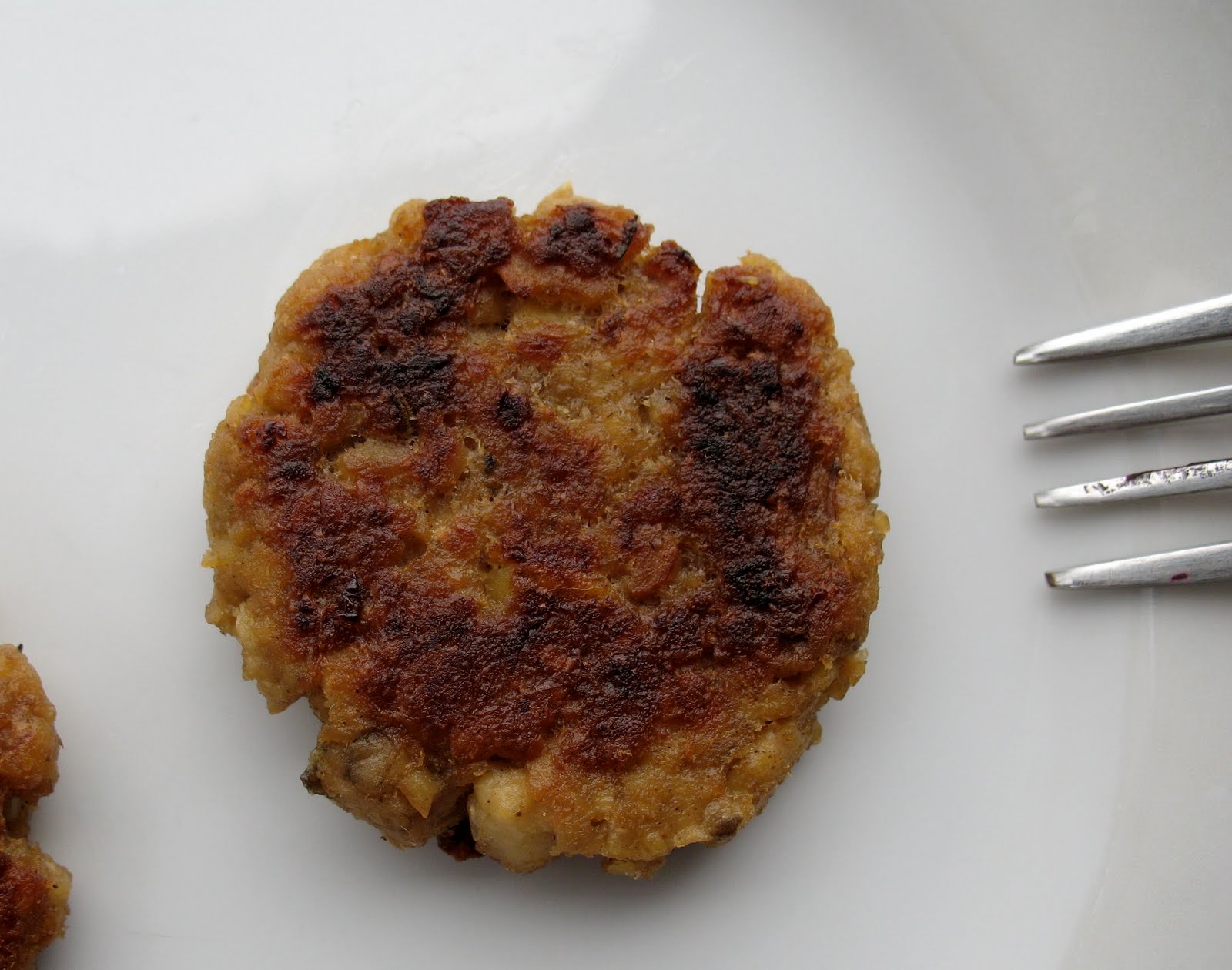
Tempeh Sausages


The word "hippie" gets bandied about a lot at my house, mock-branding various offenses against the sensibilities of our modern and disposable culture. Washing and reusing plastic bags, for one. Bringing one's own pyrex containers for leftovers to a restaurant (because, as I like to tell people, I am just that cool). Applying curry powder to any dish that doesn't really warrant it. There's a chance I'm over-applying the term.

But every so often I make a dish that is truly, undeniably deserving of the hippie label. Like these tempeh sausages (or, if you will, "soysages"). Their offenses are numerous: they're a mock meat, involve use of inappropriate seasonings (although that's partially my fault), and, most damningly, were developed at an actual honest-to-juice commune founded in the 1970s. Also? They're pretty darned good.

If you're looking for a vegetarian breakfast accompaniment, these are hard to beat. To be fair, my heart does belong to the Morningstar Farms veggie bacon, but every now and then it seems like a good idea to consume breakfast foods that don't feature disodium guanylate and artificial flavors (from non-meat sources, they point out, but still). At those times, I heartily recommend these tempeh sausages. Tempeh is steamed and grated, then mixed with a series of seasonings that give it a somewhat meaty depth. It's formed into patties and pan-fried, perfect for accompanying your waffles. Let it be known, I have no illusions that anyone would confuse these soysauges for the real thing. But I think they're pretty great in their own right. Yeah, I know I'm a hippie.

And if you're hungering for food that you wouldn't be embarrassed to serve to company, I present instead a dispatch from a Sephardic-style dinner party a friend recently hosted. The recipes are drawn from several sources, and together make for a menu that would be perfect for a sunny Passover Seder. Or any celebration of spring, really. You can read the details at Mix Magazine.


Tempeh Sausage

adapted from The New Farm Vegetarian Cookbook
yields ~12 sausages, depending on size (serves ~4)


8 ounces tempeh
1/2 tsp dried sage
1/2 tsp thyme
large pinch asafoetida (this is my addition, and optional, but it gives a nice funky depth if you've got it)
2 Tbsp flour
2 Tbsp warm water
2 Tbsp oil (I use canola)
2 Tbsp soy sauce
oil for pan-frying

Steam the tempeh over simmering water for 15 minutes. Let cool slightly, then grate on the coarse holes of a box grater. Add dry ingredients (sage, thyme, asafoetida, flour) and stir to combine, then add liquid ingredients (water, oil and soy sauce) and mix until combined. The finished product should be neither too wet nor too dry, and easily hold a shape when squeezed together.

Heat a small amount of oil in a skillet over a medium flame. Pinch off small amounts of the sausage mixture (a tablespoon or two), and press into thin patties. Pan-fry the patties until brown, and then flip and brown the other side (they should only take a few minutes per side). Serve hot.