Sunday, February 13, 2011

Chocolate Mousse-Filled Meringues in Creme Anglaise


Oftentimes I'm shocked at the caliber of drama in my friends' lives. Not the usual human drama of love and life and work and such -- I'm talking about events which seem scripted by Hollywood screenwriters, and don't normally befall mere mortals. To whit: a friend who works in resource conservation recently spent the day sorting through waste to assess a transfer station, only to be joined by some guy whose wife threw out his secret garbage bag containing $10,000 in cash. This actually happened. In real life. I know other (unnamed) friends who have staged false conflicts to get on daytime court shows (evidently you get put up at nice hotels and receive a program-paid settlement), and yet another whose vibrator was discovered during an elegant dinner party. I can't even imagine material this good. In comparison, my life is pretty yawn-worthy.

But every now and then, I try to engineer a moment worthy of the big screen (or, at the very least, the small screen). This elaborate dessert is my best attempt for a touch of glamor, crafted out of only a rudimentary baking knowledge and a good amount of eggs and dairy. Twice in the past few years I composed this ridiculous confection, broke into the houses of recently-engaged dear friends, and left it in their refrigerator (I should note that, in one of these cases, I did actually have a key). This dessert is undeniably involved, and best reserved for such situations. But when they do arise, it's great to have in your arsenal.

This recipe starts with a stellar chocolate mousse, which in and of itself is a glorious thing. But the mousse is hidden inside a cloak of soft meringue, and then the whole affair is plated on a puddle of creme anglaise, a delicious vanilla custard sauce. And, if you're feeling so inclined (and really, if you've come this far, you might as well), the sauce is studded with adorable hearts drawn out of a berry puree (or, say, the runny part of some poorly-set blueberry jam). It's undeniably involved, and takes a good chunk of time. But some situations call for high drama. Given my general impatience and poor aesthetics, the end result might be more of a quirky indie heartwarmer than a polished Hollywood oscar-winner. But I won't complain -- it's delicious, dramatic, and perfect for any Valentine.


Chocolate Mousse-Filled Meringues in Creme Anglaise


mousse adapted from Judy Rosenberg's Rosie's All-Butter, Fresh Cream, Sugar-Packed No-Holds-Barred Baking Book, creme anglaise adapted from Bon Appetit, and meringue tweaked, heavily from the Pavlova recipe from the amazing Eggbeater

yields 8 cups, plus some extra chocolate mousse
for what-have-you


Meringue:
1/2 cup sugar
1 tsp cornstarch
3 egg whites (reserve the yolks for the creme anglaise)
pinch salt
1/2 tsp vanilla
1/2 tsp white vinegar

Creme Anglaise:
1/2 cup milk
1/2 cup cream
1 chunk of vanilla bean, split (or a dash of vanilla extract instead)
3 egg yolks (left over from meringue)
3 Tbsp sugar

Chocolate Mousse:
4 1/2 oz semi-sweet chocolate
1 1/2 oz unsweetened chocolate
2 eggs, separated
1 Tbsp sugar
1/2 cup heavy cream
1 egg
1 Tbsp coffee

a bit of runny jam, or berries blitzed with sugar and lemon

Start with the meringues: preheat the oven to 250, and grease 8 muffin cups or similarly-sized ramekins. Whisk together the sugar and cornstarch, and set aside.

Place the egg whites and salt in the bowl of a mixer, and begin to beat, starting on low and gradually increasing the speed to high over the course of a few minutes, and beat until soft peaks form. Gradually add the sugar-cornstarch mixture, and then the vanilla and vinegar. Continue to beat until the meringue is glossy and forms stiff peaks, an additional 4-5 minutes.

Apportion the meringue into the muffin cups/ramekins, filling them to the top (they'll puff up a bit as they bake, but then shrink back down). Place them into a casserole dish and fill the casserole dish with water until it comes halfway up the muffin cups. Bake for an hour, until the meringues are just beginning to color. Turn the oven off, and allow the cups to cool in the oven for another hour.

While the meringue is cooking/cooling, make the creme anglaise: Place the milk and cream in a saucepan, and scrape the vanilla beans out of the pod (and then toss the bean in as well). Bring to a simmer, and then remove from heat. While the dairy is heating, whisk together the yolks and sugar in a large bowl. Pour the hot milk and cream into the yolks, whisking all the while. Pour back into the saucepan, and heat over a low flame until the custard thickens enough that you can draw tracks in the back of a wooden spoon (~5 minutes). Remove from heat, and pour through a strainer into another bowl. Cool in the refrigerator (you can make this ahead if you like).

Make the chocolate mousse: Place chocolates over a double boiler, and let sit over simmering water, stirring occasionally, until melted. Set aside to cool very slightly.

While the chocolate is melting, place the egg whites in the bowl of a mixer, and beat until frothy. Sprinkle in the sugar, and continue beating until soft peaks form. Transfer to another bowl, and set aside.

Pour the cream into the mixing bowl, and beat on high speed until soft peaks form. Set aside.

Take the remaining egg yolks, and place them in a large mixing bowl along with the whole egg and the coffee. Pour in the melted chocolate, beating vigorously so that the eggs don't curdle. Take about half the beaten egg whites, and whisk together to combine well and loosen the mixture. Then fold in the remaining whites, trying not to deflate. Fold in the cream.

To assemble the whole shebang: Take the meringue cups, and scoop out the innards using a spoon, mini ice cream scoop, or melon baller. Try to clear out ample space to fill with mousse without breaking through the meringue. Pack each meringue cup with mousse, then set them to chill in the refrigerator for at least an hour or so.

After the mousse-filled meringue cups have chilled, slide a thin knife around the edge of each one to loosen, and turn them out onto a plate. Pour the chilled creme anglaise in a puddle around it. Place drops of your berry puree/runny jam on the plate, and draw a knife through to pull them out into heart shapes. Served to your loved ones.

Monday, February 07, 2011

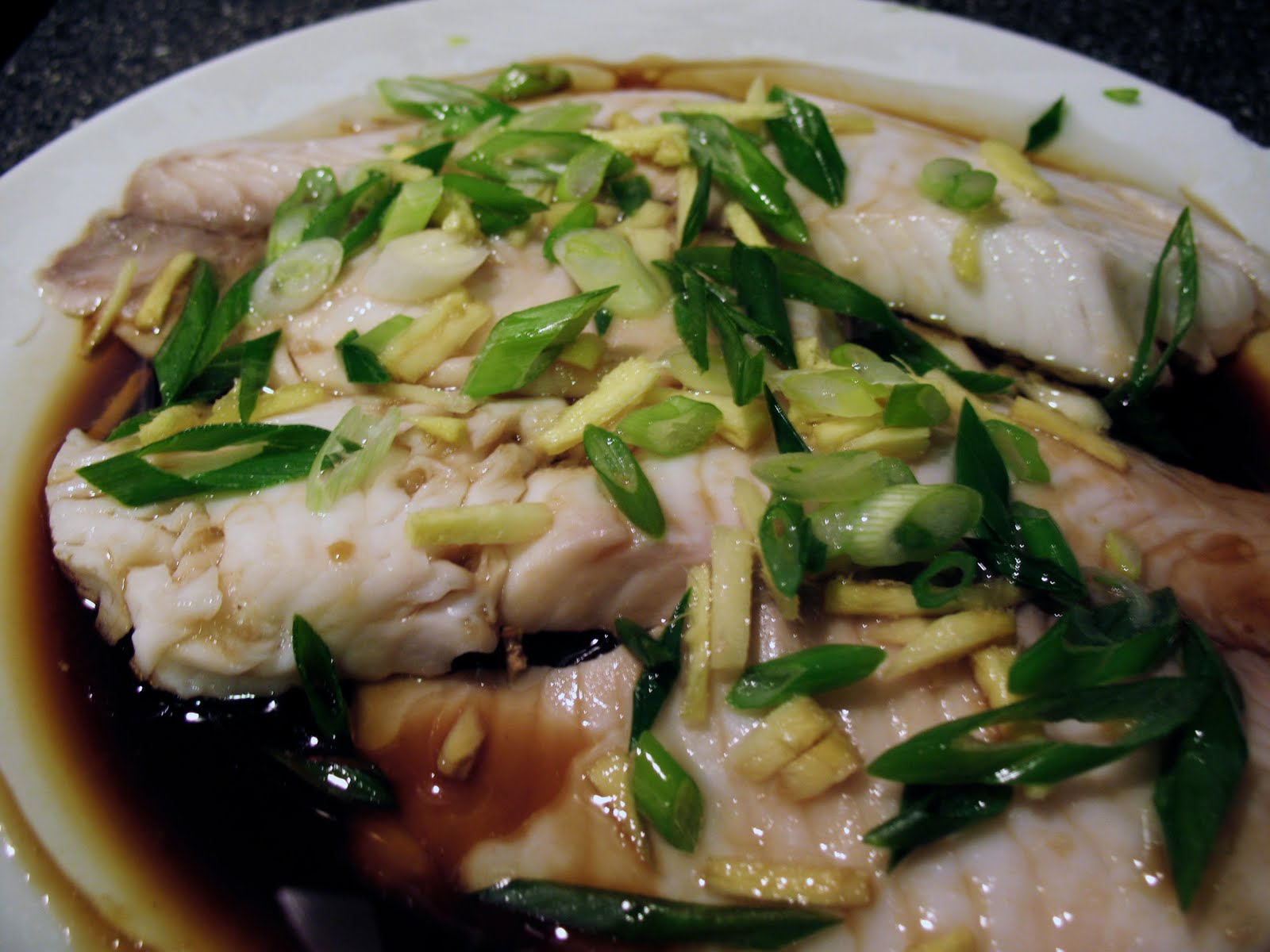
Chinese-style Steamed Fish with Sizzled Ginger and Scallions


Having a food blog can give a false impression of one's culinary prowess. Sure, I can freestyle a healthy kale & quiona pilaf, bake up a rustic-yet-elegant rosemary honey apple galette, and decorate deliciously naughty baby shower cookies. But behind the scenes are my secret failures. For one, there's my inability to produce a decent pot of rice. Rice, people. I don't know if it's my proportions, my pot, or my inability to let it cook without peeking (or some combination of the three), but it's never that absolutely perfect rice of my dreams. And another: no matter my best intentions, I seem constitutionally incapable of preparing fish without overcooking it. Until now.

The secret to my newfound success? Steaming. I've pan-fried, baked and roasted before, but never steamed. Which is a shame, because this method is great: the gentle heat lets the fish cook slowly and evenly, and the steam keeps it nice and moist. The subtle flavor of the fish comes through clearly, and even repeat offenders like me end up with a perfectly-cooked dish.

This particular recipe comes from my friend Sally Li, who prepared it for a recent dinner in celebration of the Chinese New Year. Fish is an auspicious new year's menu item, its characters sounding like the word for abundant wealth. And who doesn't want that? Any fish dish will suffice, but Li chose a traditional preparation where steaks or fillets are gently steamed, along with a few coins of ginger to remove any "fishy" smell. The simple steamed fish is then topped with fresh ginger and scallions, and a bit of sugar, soy sauce and wine, which all come together into a beautifully cohesive dish when topped with a dramatic drizzle of hot oil. You can find the recipe here, and read more about Sally's New Year celebration at The Oregonian. Next up: perfect rice.

Tuesday, February 01, 2011

Wheatberry Salad with Roasted Squash, Raddichio and Walnuts


Wintertime salads can take a little creativity. Especially when you're committed to coming up with a recipe without leaving the house.

A few days back a friend invited us to a lovely midweek dinner party, and oh-so-subtly mentioned that contributions of salad would be appreciated. I was caught between work and work-related errands, with barely enough time to cook, and definitely no time to shop. Iron Pantry Chef challenge accepted! And the results were wonderful.

To be fair, I must give due props to the amazing Casa Moro cookbook, which features a lovely warm butternut squash and chickpea salad, which is something of a spiritual godfather of this recipe. But I didn't have chickpeas, or the cilantro and red onion which perk up that version. Instead, I dug deeper into the winter larder. I came up with an acorn squash, likely leftover from Thanksgiving, and a jar of wheatberries (or perhaps the were speltberries?) I inherited when a friend went gluten-free. The refrigerator yielded the remains of some colorful radicchio (it is truly shocking how long that stuff keeps), and I grabbed a handful of walnuts to add a nutty depth and tie it all together. I dressed everything with lashings of tahini sauce, although you could easily go the green-salad route and pair it with a nutty vinaigrette and a few crumbles of goat cheese. The composed result is much more beautiful than a mid-winter pantry meal has any right to be, and manages to be both toothsome and light at the same time. It's a welcome potluck contribution, and also makes a fine meal on its own, with perhaps just some crusty bread to accompany.

And, for those who do get out of the house (for grocery shopping and other less wholesome pursuits), here's a recent article I wrote about global hangover recipes. An eagle-eyed editor sadly removed the part where I described it as a "culinary walk of shame" (I can't imagine why, right?), but left intact recipes for soothing congee, sloppy shakshouka, bracing green smoothies, and rich pasta carbonara and French onion soup. Any one of them makes for a great start to your day (whether or not you're hung over).


Wheatberry Salad with Roasted Squash, Raddichio and Walnuts

1 smallish winter squash, peeled and cubed
olive oil and salt as needed
1 cup wheatberries (or spelt berries)1/4 cup walnuts, toasted (if they're not toasted, you can toss them in the oven along with the squash, if you watch them carefully)
1 small head radicchio, thinly sliced
1/4 cup tahini
2 cloves garlic, pressed
juice of 1 small lemon
pinch each salt and sugar
water as needed

Preheat the oven to 400 degrees. Peel the squash, and cut into 1" cubes. Toss with a bit of olive oil and salt, and set in the oven to roast, turning occasionally, until they are soft (and just beginning to caramelize around the edges, if you like), ~30+ minutes. Remove, and let cool slightly.

While the squash is roasting, cook the wheatberries. Place in a pot with a few inches of water to cover, add a pinch of salt, and bring to a boil. Reduce heat until it's just high enough to maintain a simmer, and cook until the berries are soft, ~45+ minutes. They won't be totally soft, but should clearly be fully hydrated, with no chalky white parts inside. Drain, and allow to cool slightly.

To make the dressing, mix together the tahini, garlic, lemon juice, and salt and sugar. Add water as needed to thin to a nice pourable consistency (add it gradually, as I can tell you it's easy to accidentally overdo it).

To assemble the salad, layer the wheatberries on the bottom of a serving platter (or, if you're taking it to a potluck, a container with a lid). Layer the squash on next, then top with the walnuts and radicchio. Serve warm, with lots of tahini dressing.

Wednesday, January 26, 2011

Hot Toddy


There's a picture of me at age one or so, sitting in the middle of a bucolic field, wearing adorable footed pajamas, and screaming my head off. We had taken a family trip to a local educational farm, where in addition to viewing the antique harvesters and free-ranging chickens, you could purchase bottles to feed to the wet-eyed baby goats and cows and such. But when I saw those bottles, chocked full of Purina Instant Goat Formula, I wanted them for my very own, and no amount of logic could convince me that they weren't for human consumption. Screaming ensued.

My parents were undoubtedly trying to protect me from some species-jumping zoonotic virus and the like, but they were also protecting me from this sad fact of life: often the things you covet end up not being what you'd thought they'd be at all. As any kid who has chomped a square of baking chocolate can attest, this is one of the disappointing realities of growing up.

I experience this same oh-I-thought-this-would-be-much-better wash of disappointment whenever I drink mulled wine. It promises toasty happiness, a boozy warm blanket on cold days. But instead, it often delivers a heavy, overly-sweetened and overly-seasoned concoction, too cloying to enjoy. I'm someone who normally lightens up my sweet sangria with a good splash of something bubbly to cut through, so I suppose it's no surprise that mulled wine is often a let-down for me. I much prefer a hot toddy.

Toddies take many forms, but my favorite is simple cup of weak tea, brightened up with lashings of lemon and ginger, sweetened (but not too much) with a bit of honey, and spiked with a shot of bourbon. It's barely a recipe at all, but is one of the most satisfying ways to warm up (and slow down) on cold days. The grown-up world has its disappointments, sure. But man does it have its benefits.


Hot Toddy

yields 2

1 1/2 cups boiling water
1 bag black tea (use decaf if your constitution requires)
1/2" ginger, scrubbed and sliced into thin coins
1 lemon
1-2 tsp honey, or to taste
2 shots bourbon (rum is also fine, if you prefer it)

Set the teabag and ginger in a container with the hot water and let steep. While steeping, juice the lemon (reserving a couple slices for garnish if desired). Add the lemon juice and honey to taste. Remove the teabag, and divide the liquid between two cups. Add a shot of bourbon to each, stir and enjoy.

Tuesday, January 18, 2011

Vegetarian Wontons


There are days, especially when deadlines are piling up, that I try to minimize my kitchen time. I give myself license to get take-out burritos, eat insta-meals, or thaw a container of soup that I tucked in the freezer and forgot months ago (hello, borscht!). And then, when deadlines have been dealt with, I return to my kitchen with a vengeance. I forgo take-out burritos for handmade tortillas. I make a full batch of chocolate chip peanut butter oatmeal cookies (and eat a frightening amount of dough in the process). And I fill my freezer with vegetarian wontons.

It's always so nice to welcome back a food you thought was gone forever. Take-out Chinese food was a part of our regular dinner rotation when I was growing up, as it is for many New Yorkers. Greasy lo-mein noodles, gooey shrimp in lobster sauce, and countless cardboard containers of wonton soup. I loved wonton soup as a kid -- just a simple broth, with maybe a chunk of pork or sprinkling of scallions for accent, and then the slippery, savory dumplings -- and reluctantly said goodbye when I went vegetarian. But recently, with a package of wonton wrappers and a free evening to reconnect with my kitchen, I came up with a vegetarian version that brings back all those delicious memories.

These dumplings do take some effort, but with pre-made wrappers and an uncooked filling, they're definitely a bit easier than others of their species. The protein of your choice (I favor a chicken-style patty) is ground up, and given savory heft from soy sauce, sesame oil, and rice wine. Minced water chestnuts provide crunch (the few that I managed to not eat right out of the tin), and scallions, ginger and cilantro provide a bit of spark. As an added bonus, they freeze (uncooked) beautifully, and can be stashed away as an insta-meal for those days when you are, sadly, separated from your kitchen. Although with a freezer full of these dumplings, you really won't miss cooking much at all.

And speaking of things that have kept me from the kitchen, here's a recent article about all the many delicious savory dishes you can make from jam. I spent an afternoon with the amazing Marisa from Food in Jars, hearing about many of her delicious recipes, and sharing some of my own. If your jam-filled pantry looks anything like mine, I recommend checking it out.


Vegetarian Wontons

adapted from numerous sources and my memories of Ho Yen restaurant
yields ~4-5 dozen wontons


8 ounces faux meat (preferably chicken-style or pork-style), roughly chopped
2 stalks scallions, finely minced
1 Tbsp soy sauce
1 tsp rice wine vinegar
1/2 tsp cornstarch
1 tsp sesame oil
pinch sugar
~2 Tbsp water chestnuts, finely minced
1 handful cilantro, finely minced
1/4 tsp white pepper
1/2" minced ginger
2 Tbsp xiaoxing rice wine or sherry

1 package wonton wrappers
broth for servings
1 scallion sliced, and a handful spinach, washed and chopped (optional)

Bring a pot of salted water to a boil, and heat up broth for serving. Add spinach to broth if desired.

Place the faux meat in a food processor, and pulse until it is reduced to small bits. Turn out into a bowl, and add the remaining filling ingredients. Taste, and adjust seasonings as needed (different proteins come with different seasonings, so feel free to tweak to best season your wontons).

Open the package of wrappers, covering with a dishtowel when not using (they can dry out quickly). Grab a small dish of water with a pinch of cornstarch, and lay out a few wrappers on your work surface. Place a scant tablespoon of filling in the center of each one, and moisten the edges with your cornstarch water. Fold each wonton in half to form a triangle, pinching or pressing the edges so that they seal. If desired, take the edges of the smaller corners of the triangle, and pinch together to join. Repeat until you've formed all of your wontons. Make sure your work surface remains relatively dry, so that you don't accidentally glue down your wontons. If you would like to freeze any wontons, place a plate of them in the freezer at this stage. When par-frozen, move to a sealed container.

When your wontons are shaped, place a batch of them in the boiling water and simmer, gently, until they rise to the surface and the wrapper is cooked (it should only take a few minutes). Remove with a skimmer or slotted spoon, and repeat until they are all cooked. To serve, place a few wontons in a bowl, add the broth, and top with a few scallions.

Tuesday, January 11, 2011

Basic Bran Muffins


Pity the poor bran muffin. Bakers often seem to assume it is the breakfast choice of the penitent, eaten solely as fiber delivery system. Even my beloved childhood bakery came up with a barely palatable fat-free version, composed of various whole grains shellacked together with a slurry of egg whites and honey. I was reminded of it the other day when I accidentally left the remains of a pot of hot cereal on the counter and it crusted over.

But these bran muffins, they are lovely. They take into account that you want toothsome whole grains (especially to counterbalance, say, the refried beans, cheese and guacamole that are also on your breakfast table), and have an almost nutty depth of flavor. But they're also moist and light. The molasses and honey add sweetness and depth, and the nutmeg, orange rind and buttermilk add flavorful notes to lighten up all that brown. I sometimes grate in a few carrots or an apple, or stud them with nuts and seeds if I've got em, but they're nice enough on their own. Especially with a nice spread of butter -- like I said, it's all about balance.


Bran Muffins

inspired by The New Laurel's Kitchen, but tweaked beyond recognition over the years
yields 12 large muffins


2 cups whole wheat pastry flour
1 cup wheat bran
3/4 tsp salt
1 tsp baking soda
1/2 tsp nutmeg
1 1/3 cup buttermilk
1 Tbsp grated orange rind (optional)
2 eggs
1/4 cup canola oil
1/2 cup honey
1/4 cup molasses

Preheat your oven to 350 degrees, and grease or line 12 muffin cups.

Sift together the flour, bran, salt, soda and nutmeg in a large bowl. In a separate bowl, whisk together the buttermilk, orange rind (if using), eggs, oil, honey and molasses until well combined. Add the wet ingredients to the dries, and mix until just combined -- do not over-mix. Divide among the muffin cups (they will be fairly full), and bake until a tester comes out clean, ~20-30 minutes.

Wednesday, January 05, 2011

Gluten-Free Pierogies


When you tell stories (fiction or nonfiction), the narrative you end up with can be vastly different than the one you thought you were going to tell. A while back I heard about a Ukrainian church here in Portland that sells handmade pierogies, and figured it might make for a good radio/print piece. The Pacific Northwest became a hub for Soviet evangelical immigration when Gorbachev let religious minorities out of the country in the 1980s, so I figured I'd find a bunch of old grandmothers making dumplings. Maybe I'd find a few young people learning the traditional foodways, or maybe I'd just profile the last vestiges of a disappearing art.

Instead, I found a basement full of people of all ages. Men and women made dough and shaped pierogies, and even the littlest kids proudly carried out salt and pepper shakers. This wasn't just a bunch of grandmothers talking about the old country. It was a mix of new and old immigrants, all having a ridiculous amount of fun. It was a community coming together, around a living, evolving recipe. It can be so nice to be surprised. (If you'd like to hear the NPR story itself, you can find it here, and I'll link to The Oregonian's longer print story when it runs next week.)

After my story ran, I heard from an old housemate who wanted to try his hand at making pierogies. Gluten-free pierogies. How could I say no? We found a pasta recipe Gluten-Free Girl was kind enough to share with the internet (thanks, Epicurious!), upped it by half in order to make an army of dumplings, and prepared the church's filling recipe. And oh, were they good. Perhaps a new gluten-free tradition has been born (one that evidently makes us so excited we only manage one blurry phone shot before devouring -- sorry there).

Gluten-Free Pierogies

dough adapted from Gluten-Free Girl and the Chef, filling adapted from St. John the Baptist Ukrainian Orthodox Church
yields ~50 small pierogies, or fewer larger ones


As with most gluten-free recipes, measuring by weight is preferable if you can swing it.


Dough:
1 cup (3.75 oz) corn flour or sorghum
3/4 cup (3.75 oz) quinoa flour
3/4 cup (3.25 oz) potato starch
1 Tbsp xanthan gum
1 1/2 tsp guar gum
1 1/2 tsp salt
3 eggs
6 egg yolks

Filling:
2 Tbsp neutral oil
2 onions, chopped (1 for filling, 1 for topping)
1 1/2 lb russet potatoes
1/2 cup grated cheddar
1/2 tsp salt
1/2 tsp pepper

To Finish:
butter
sour cream

To make the filling: Heat the oil in a large skillet over a low flame. Sauté the onions in the oil until golden brown, about 15-20 minutes. While the onions are cooking, peel the potatoes and cut into 1-inch cubes. Cook potatoes in a large saucepan of boiling salted water until quite tender, about 10 minutes. Drain the potatoes, and mash until smooth. Mix in half the caramelized onions (set aside the other half) and the cheddar cheese, and season with salt and pepper. Cover and keep the filling refrigerated until you are ready to fill your pierogie (can be prepared the night before).

To make the dough: Mix together all of the dry ingredients in the bowl of a stand mixer fitted with a paddle attachment. Add the eggs and yolks, and mix until the it forms a cohesive, firm dough. This should take a few minutes. If it doesn't come together, add an additional egg yolk. The resulting dough will be firm but easily moldable.

To finish the pierogies: Set a pot of salted water to boil over the stove. Pinch off a small amount of dough, and cover the rest so that it doesn't dry out. On a gf flour-dusted counter, roll the dough as thin as you can, about 1/8" or thinner (alternately, you can feed this through a pasta machine). If you favor traditional small pierogies, cut out circles with a 2" cutter. If you are lazier (like me), a slightly larger cutter works fine as well. Pull up the dough scraps, mold them together, and set aside with the remaining dough. Place a small amount of filling in the center of the circle, ~1 tsp for a 2" circle. Moisten the edges of the circle with a bit of water, fold in half, and crimp closed with a fork. Repeat with remaining dough and filling.

As the batches of pierogies are finished (or at the end, if you're working solo), drop them gently into the boiling water, and simmer until done, ~8 minutes. Remove with a slotted spoon or skimmer, and toss with a bit of butter to keep them from drying out.

To serve, take your reserved caramelized onions, and add a few tablespoons of water. Bring up to a boil for a minute or so, to soften the onions and make them saucy. Serve the pierogies topped with the caramelized onions and a good blob of sour cream.